
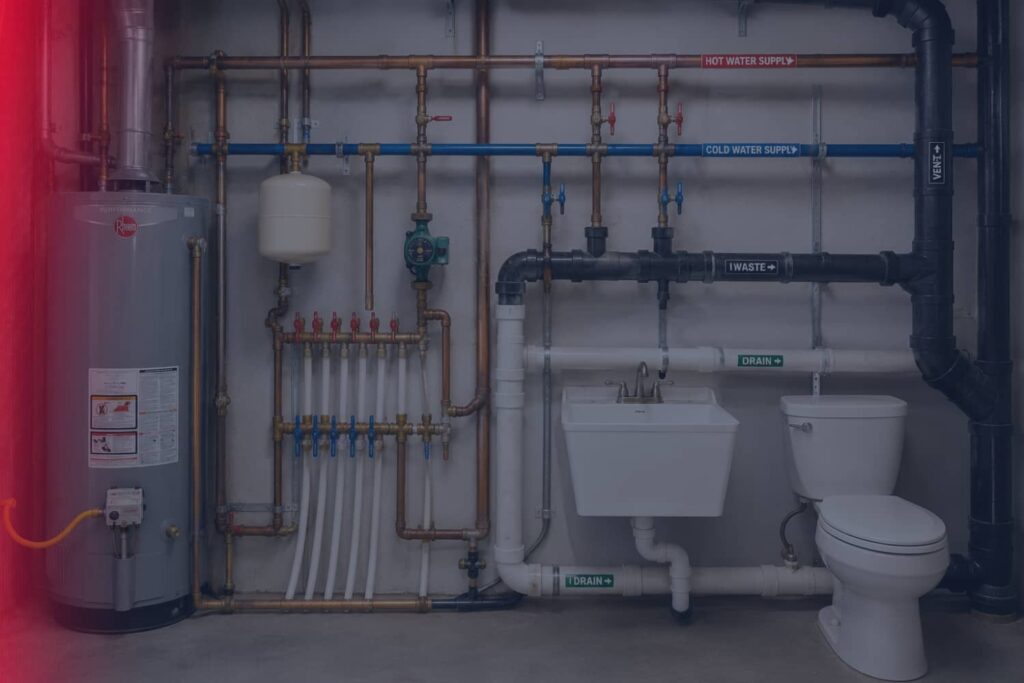
Plumbing problems can ruin your day fast. In Southwest Florida, from Fort Myers to Naples, your pipes work under unique conditions. Heavy rain, high humidity, hard water, and sandy soil test your home every day. If you want to avoid costly repairs and hidden leaks, learning how to maintain home plumbing systems is essential.
Taking care of your pipes is not just about keeping water flowing. Small drips quickly lead to mold outbreaks, structural damage, and high utility bills. Whether you live in Bonita Springs year-round or leave your home for the summer, a simple maintenance routine protects your investment.
Why Florida Homes Face Unique Plumbing Challenges
Florida plumbing systems deal with unique regional stresses. Knowing what your pipes face helps you spot issues early.
- Hard Water Mineral Build-Up: Water across Lee and Collier counties contains high calcium levels. These minerals leave crusty deposits inside pipes, faucets, and water heaters, lowering pressure over time.
- Extreme Humidity and Mold Growth: High moisture levels mean even a small pipe sweat or slow trickle creates the perfect breeding ground for mold inside walls and under sinks.
- Intrusive Tree Roots: Fast-growing plants like ficus and palm trees push roots deep into soil, searching for moisture and cracking underground sewer lines.
- Corrosive Salt Air: Coastal air near Naples and Bonita Springs accelerates corrosion on exposed metal pipes and water heater tanks.
- Vacant Home Stagnation: Many homes sit empty for months. Stagnant water in traps lets sewer gas enter, while unchecked leaks can flood a home completely unnoticed.
Understanding these regional threats early helps you take proactive steps to protect your Southwest Florida home before small issues turn into major damage.
Simple Daily and Weekly Plumbing Maintenance Habits
Maintaining your plumbing starts with small habits that prevent clogs and pipe damage.
Prevent indoor drain clogs by watching what goes down your sinks and toilets. Never pour cooking grease, coffee grounds, or food scraps down your garbage disposal. Grease cools inside your pipes and forms solid blockages. In the bathroom, flush only toilet paper and waste. Wipes do not break down easily and choke drain lines.
Keep strainers in all sink and shower drains to catch hair and soap scum. Clean these strainers weekly to maintain smooth drainage.
[Visual Idea: Illustrated checklist showing items that should never go down Florida drains versus safe items.]
Monthly and Quarterly Plumbing System Checklist
Regular fixture checks help you spot small leaks before they cause expensive water damage or mold.
Check under every sink in your home monthly. Use a flashlight to inspect supply lines, valves, and drain traps under kitchen and bathroom sinks. Feel along pipes for moisture, rust, or green corrosion on copper fittings. If a cabinet bottom feels soft or warped, you likely have a slow leak.
Test toilet valves and flappers every few months. A worn flapper lets water run constantly from tank to bowl, driving up utility bills. Drop food coloring into the toilet tank. Wait fifteen minutes without flushing. If color appears in the bowl, replace the flapper right away.
| Inspection Task | Frequency | What to Look For |
| Sink Cabinets | Monthly | Damp wood, water spots, green pipe corrosion |
| Toilet Flapper | Every 3 Months | Food coloring leaking from tank into bowl |
| Water Heater Valve | Every 6 Months | Crusty mineral build-up, drips, rust at base |
| Outdoor Hose Bibs | Quarterly | Leaks at spigot handle, low water pressure |
| Main Water Shut-Off | Every 6 Months | Stiffness, rust, ability to turn smoothly |
Taking a few minutes every few months to complete these quick checks keeps your plumbing system reliable and stops small drips before they turn into major water damage.
Annual Maintenance for Florida Water Heaters
Keep your water heater working efficiently by flushing the tank yearly to remove heavy mineral sediment.
Hard water in Southwest Florida causes mineral sediment to settle inside your water heater tank. This sediment acts as an insulating blanket over the heating element, forcing the system to work harder, consume more electricity, and wear out early.
To flush your water heater, turn off the breaker or gas supply. Attach a garden hose to the drain valve at the bottom of the tank. Run the hose to a safe outdoor discharge area. Open the drain valve and let water flow until it runs clear of sediment. Lift the temperature and pressure relief valve lever briefly to ensure water releases properly.
How Plumbing Leaks Lead to Mold and Structural Damage
Unaddressed plumbing leaks create mold hazards and weaken structural stability within 24 to 48 hours.
Our warm climate gives mold spores everything needed to thrive. When a hidden pipe inside a wall or subfloor develops a leak, moisture spreads through drywall, baseboards, and framing. Dark wall cavities trap heat, allowing mold to expand before you see visible spots on paint.
Structural wood absorbs moisture like a sponge. Continuous dampness rots wooden studs and subflooring. During home evaluations, inspectors often find soft subflooring around toilets and showers where slow leaks went unnoticed.
In addition, your HVAC condensate line ties closely into your water management system. If your air conditioner condensate drain line clogs with algae, water backs up into the drain pan and overflows into ceilings or walls. Clearing your A/C drain line with vinegar monthly protects ceiling structures.
[Visual Idea: Diagram showing how a hidden wall pipe leak spreads moisture into drywall, wood framing, and floor sub-structures over 48 hours.]
What Inspectors Look For During a Plumbing Evaluation
A professional inspection evaluates the age, material, safety, and performance of your entire plumbing system to identify hidden risks.
When inspectors examine a home in Naples or Fort Myers, they review visible supply lines, drain pipes, and fixtures. They check water pressure using a spigot gauge. Standard pressure should measure 40 to 80 PSI, as excessive pressure strains pipe joints and causes premature failure.
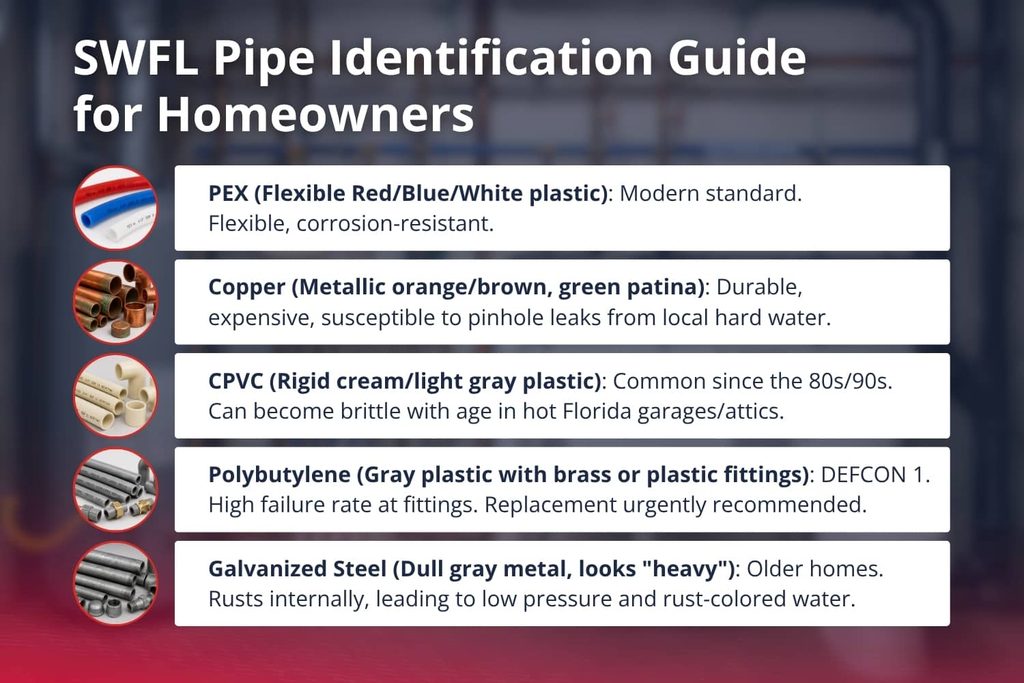
Inspectors pay close attention to pipe materials. Older Southwest Florida homes may feature galvanized steel pipes that corrode from the inside out, or polybutylene piping that ruptures without warning. Cast iron drain lines under older slab foundations suffer from bottom-channel corrosion due to acidic soil.
Key items checked during a review include:
- Water Heater Condition: Checking tank age, corrosion levels, TPR valve operation, and expansion tank installation.
- Main Shut-Off Valve: Confirming the main shut-off valve is easily accessible and fully functional in an emergency.
- Drain Flow and Venting: Verifying that drains flow quickly without gurgling sounds that indicate venting blockages.
- Electrical Safety near Water: Ensuring electrical panels and outlets near plumbing lines have proper grounding and GFCI protection.
A professional evaluation brings these hidden system risks to light, giving you the clear answers you need to protect your property before minor pipe issues become major emergencies.
Seasonal Plumbing Care for Southwest Florida Snowbirds
Preparing your plumbing system before leaving your Florida home for several months protects your property while away.
If you leave your home in Fort Myers or Bonita Springs vacant during summer, set your main water shut-off valve to off. Shutting off main supply prevents catastrophic flooding if a pipe fails while away. Always turn off the breaker to your electric water heater when turning off main water.
Never leave sink traps unsealed. Standing water in P-traps keeps sewer gas and pests out. Pour a small amount of mineral oil down sink drains and toilet bowls before leaving to prevent evaporation in summer heat.
Coordinate with a trusted local home inspector to perform periodic visual checks inside your property while away.
Related Questions to Explore
Can a roof leak look like an indoor plumbing leak?
Yes. Water from damaged shingles or cracked vent pipe flashings can travel down wall studs and drip onto ceilings far from the entry point, easily mimicking a plumbing issue. A thorough roof inspection helps pinpoint the true source of water intrusion.
Why does an air conditioner drain line cause water damage?
High humidity forces A/C units to pull gallons of moisture from the air daily. If the condensate drain line clogs with algae, water overflows into ceilings or walls, mimicking a burst pipe. Regular HVAC maintenance keeps drain lines clear and functioning.
Are electrical panels near plumbing lines dangerous?
Water leaks near electrical panels, outlets, or appliance wiring create severe shock hazards and rapid corrosion. An electrical system evaluation ensures all wet areas have functioning GFCI outlets and properly grounded wiring to keep your family safe.
How does excess water affect a concrete slab foundation?
Standing water from broken drain lines or poor exterior drainage weakens sandy soil beneath slab foundations. Over time, this causes floor cracks, subfloor rot, and costly settlement issues that require an exterior and foundation review.
What gets covered during a full home inspection?
A comprehensive home inspection evaluates every major system, including roofing, plumbing, electrical, heating, and structural components. Homeowners receive clear digital reports highlighting hidden risks, necessary repairs, and upcoming maintenance priorities.
When to Call a Professional
Knowing when to call a professional plumber or home inspector saves you time and money.
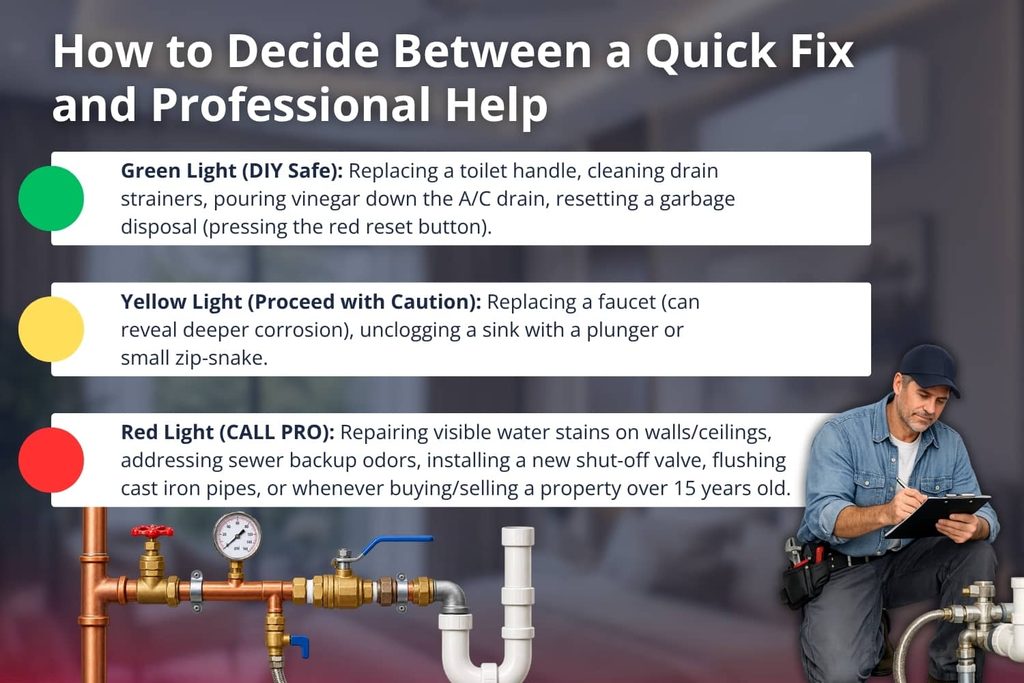
While cleaning strainers is an easy DIY task, major plumbing requires professional expertise. Call a professional if you notice sudden drops in water pressure, unexplained bill spikes, ceiling stains, or running water sounds when faucets are off.
If you are buying or selling a home, or if your property is over fifteen years old, schedule a comprehensive home inspection. Detailed digital reports highlight pipe corrosion, hidden leaks, and aging water heaters before they turn into emergencies.
Protecting Your Southwest Florida Home Investment
Learning how to maintain home plumbing systems protects your property value. By checking under sinks monthly, flushing your water heater yearly, and managing hard water challenges, you keep your plumbing running smoothly across Fort Myers, Naples, and Bonita Springs.
Pay attention to early warning signs like slow drains, faint water spots, or unusual odors. Taking action early prevents minor plumbing issues from developing into costly structural damage or mold growth.
When you need an accurate, unbiased evaluation of your property, turn to experienced local experts. Schedule a detailed digital home inspection with Accurate Home Inspectors of Florida today to gain complete peace of mind about your home systems.