
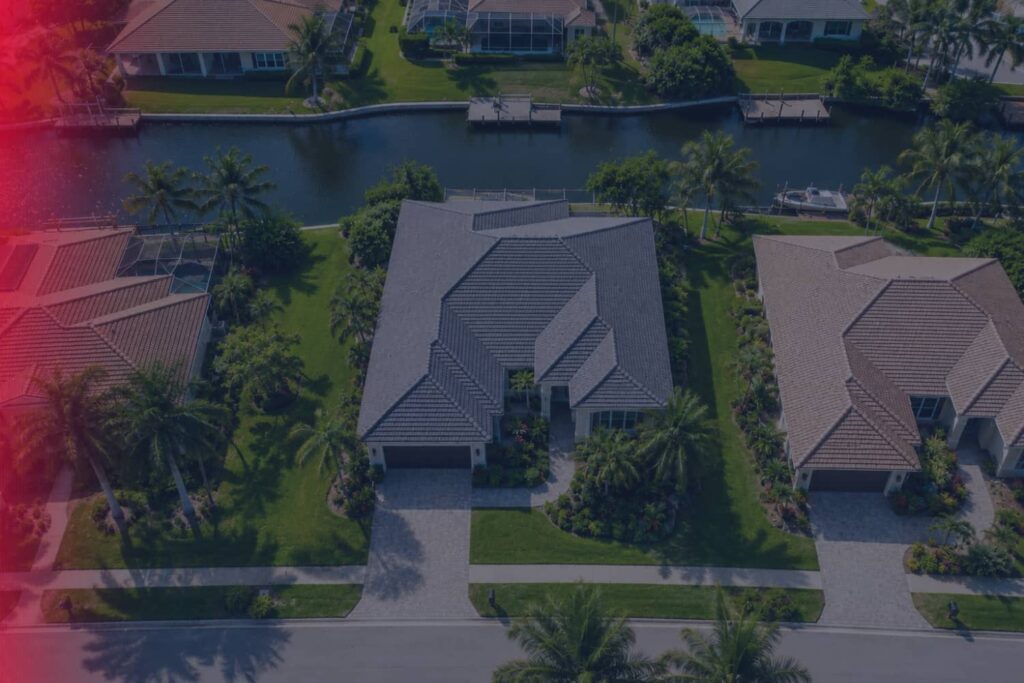
In Southwest Florida, the age of roof and insurance coverage options are directly linked because insurers treat older roofs as high storm risks. In cities like Fort Myers, Cape Coral, and Naples, an aging roof can trigger higher premiums, coverage downgrades, or policy cancellations if it lacks proper inspection documentation.
Knowing how insurance carriers evaluate your roof helps you keep your home protected and your rates manageable.
Why Roof Age Matters So Much in Southwest Florida
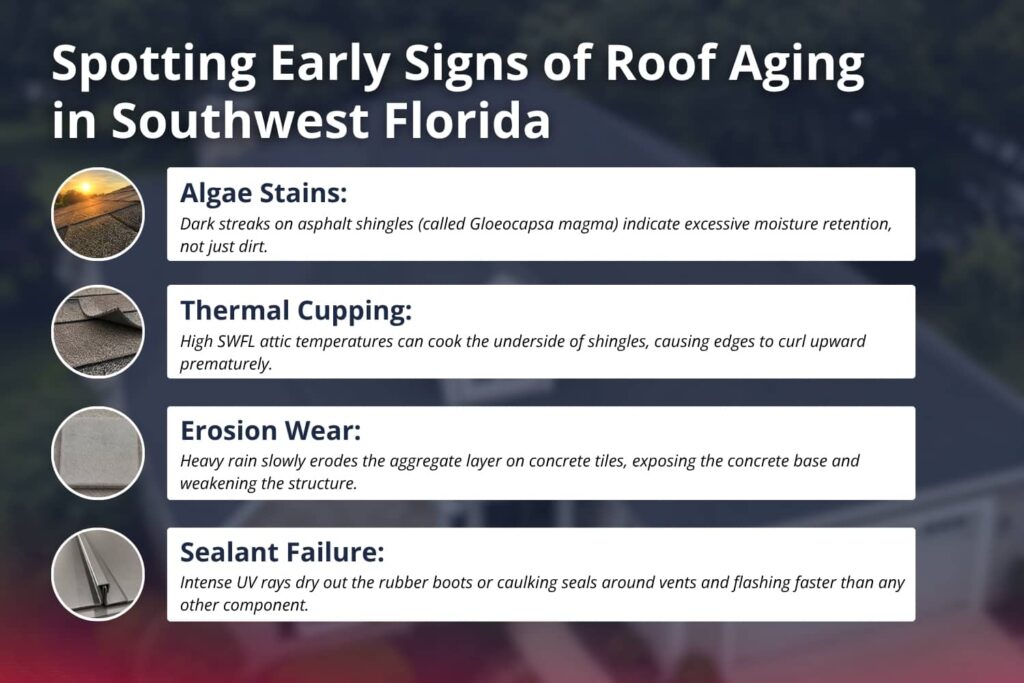
Florida experiences intense direct sunlight, heavy summer downpours, high humidity, and strong coastal winds. These climate factors cause roofing materials to break down faster in Lee and Collier counties than in many other parts of the country.
When an insurance underwriter evaluates your property, the roof is your home’s first line of defense against the elements. If a roof is past its prime, a standard afternoon thunderstorm in Cape Coral or Estero can lead to hidden water intrusion. Over time, moisture leaks can damage attic insulation, rot wooden structural trusses, and ruin drywall ceilings.
Because coastal weather causes accelerated wear and tear, insurance companies set strict timelines on how long they will cover a roof without requiring a professional inspection or replacement.
How Roof Age Affects Your Insurance Coverage Options
The age of your roof dictates the type of coverage an insurer will offer. Newer roofs usually qualify for complete replacement coverage, while older roofs may face limitations or exclusion clauses.
Replacement Cost Value (RCV) vs. Actual Cash Value (ACV)
- Replacement Cost Value (RCV): This coverage pays the full cost to repair or replace your roof with new, comparable materials at current market prices, minus your standard deductible. Insurance providers generally reserve RCV policies for younger roofs with plenty of remaining useful life.
- Actual Cash Value (ACV): If your roof reaches a certain age, your insurance carrier may transition your policy to ACV. ACV factors in depreciation. If a storm damages your 14-year-old shingle roof, the payout will be calculated based on its reduced value today, leaving you to pay the difference out of pocket.
Policy Non-Renewals and Cancellations
If your roof passes a specific age threshold, your insurer may send a notice of non-renewal. To keep your home insured, you may be asked to replace the roof immediately or prove through a detailed digital inspection report that the roof still has at least five years of remaining useful life.
The table below outlines how common roofing materials in Southwest Florida are generally viewed by insurance carriers based on their age:
| Roof Material Type | Typical SWFL Lifespan | Insurance Re-evaluation Age | Common Coverage Impact |
| Architectural Shingles | 15 to 20 Years | 10 to 15 Years | May require a 4-Point inspection; potential shift to ACV coverage. |
| 3-Tab Shingles | 10 to 15 Years | 10 Years | High risk for non-renewal; insurance companies often require replacement. |
| Concrete or Clay Tile | 25 to 30+ Years | 15 to 20 Years | Underlayment wears out before tiles; inspection required to check underlayment. |
| Metal Roofing | 30 to 50 Years | 20 Years | Highly durable against wind; requires proof of structural fasteners and seal condition. |
Fortunately, recent updates to state legislation give property owners clear legal rights when facing roof-related non-renewals.
Florida Insurance Legislation and the 15-Year Rule
Florida real estate and insurance laws have updated significantly in recent years to stabilize the market. These updates directly affect how the age of roof and insurance decisions are handled across the state.
Under current Florida regulations, insurance companies cannot refuse to issue or renew a homeowner policy solely because a roof is less than 15 years old, provided the roof is in good condition. If your shingle roof is between 10 and 15 years old and an insurer threatens to deny coverage, you have the right to get an independent roof inspection.
If an authorized home inspector certifies that your roof has at least five years of remaining useful life, the insurance company must allow you to keep your coverage for the remainder of the policy period. This law gives SWFL homeowners valuable leverage, protecting them from paying for unnecessary roof replacements on roofs that are still sound and watertight.
The Essential Role of 4-Point and Wind Mitigation Inspections
When dealing with roof age and insurance requirements, two specialized home inspections are vital for Florida property owners.
1. The 4-Point Inspection
Insurance companies usually request a 4-Point inspection when a home reaches 15 to 20 years of age, or when a roof turns 10 years old. This evaluation examines four major structural and mechanical areas:
- Roofing Systems: Checks material age, roof condition, leaks, structural integrity, and remaining life span.
- Electrical System Evaluation: Checks panel types, breaker safety, wiring materials, and hazard risks.
- Plumbing System Inspection: Evaluates pipe materials, water heater age, and active leak signs.
- HVAC Inspection: Examines heating and cooling unit condition, age, and efficiency.
A passing 4-Point inspection confirms to your insurance company that all main systems are updated and operating safely.
2. The Wind Mitigation Inspection
While a 4-Point inspection is often mandatory, a Wind Mitigation inspection is optional but highly recommended because it directly lowers your insurance premiums.
During a wind mitigation evaluation, a certified inspector checks how well your roof structure resists extreme hurricane-force winds. The inspector documents specific build features, such as:
- Roof Shape: Hip roofs (sloped on all sides like a pyramid) handle high winds much better than gable roofs and receive substantial insurance discounts.
- Roof Deck Attachment: The size and spacing of nails securing your roof plywood to the rafters.
- Roof-to-Wall Attachments: The strength of metal clips or hurricane straps securing the roof frame to your home walls.
- Secondary Water Barrier (SWR): A self-adhered waterproof layer applied beneath your shingles or tiles to prevent leaks if shingles blow off during a storm.
Even if your roof is 12 or 14 years old, strong wind mitigation features can save you hundreds or even thousands of dollars on your annual insurance policy in Fort Myers and Naples.
Practical Steps to Take When Your Insurer Flags Your Roof
If you receive a letter from your home insurance company stating that your roof is too old, do not panic. You have clear, actionable steps you can take to safeguard your policy.
Action Checklist for SWFL Homeowners:
- Review your permit records: Check with your local city or county building department (such as Lee County or Collier County permitting offices) to find the official roof installation permit date. Insurance records are sometimes incorrect about exact installation dates.
- Schedule an independent professional inspection: Hire a licensed local home inspector to evaluate the roof condition rather than relying on an automated drive-by assessment from an insurance company worker.
- Document minor repairs promptly: Fix broken tiles, replace missing shingles, and reseal flashing immediately. Clear photos and receipts proving recent repairs show proactive home maintenance.
- Obtain a official Remaining Useful Life certification: If your inspector determines your roof has at least five years of life left, submit this documentation to your insurance provider to dispute non-renewal notices.
- Compare quotes from multiple insurance carriers: Different insurance companies have different risk tolerances. A roof that one carrier rejects might be fully acceptable to another local agency.
Taking these proactive measures ensures you have the exact documentation needed to protect your policy and resolve common roof coverage questions.
Related Questions to Explore
What other home inspections are critical before buying a home in Southwest Florida?
A full inspection evaluates a property from top to bottom, beyond just the roof. A complete assessment includes an electrical system evaluation, plumbing system inspection, HVAC performance check, and an exterior and foundation review. Checking all major mechanical and structural components prevents costly surprises after closing.
How fast do home buyers receive their inspection results?
Most professional inspectors deliver a detailed digital report within 24 hours of completing the site walk-through. Modern digital inspection reports include high-resolution photos, clear defect summaries, and actionable maintenance notes that you can share directly with real estate agents or insurance brokers.
Should sellers get a home inspection before listing their property?
Yes, scheduling a pre-listing inspection gives sellers a clear view of necessary repairs before putting a house on the market. Fixing minor plumbing leaks, updating outdated electrical panels, or clearing roof maintenance items in advance prevents contract delays and protects your asking price during negotiations.
What home systems break down fastest in the local coastal climate?
High heat, humidity, and coastal salt air take a heavy toll on HVAC units, exterior paint seals, and concrete foundations. Regular cooling system tune-ups and routine exterior structural checks help prevent hidden moisture intrusion and protect structural integrity against extreme weather.
How does a wind mitigation inspection lower insurance rates?
A wind mitigation inspection evaluates structural features like roof geometry, roof-to-wall attachments, hurricane straps, and protective window shutters. Documenting these hurricane-resistant building features allows insurance companies to assign lower risk scores, unlocking substantial state-mandated premium discounts.
When to Call a Professional
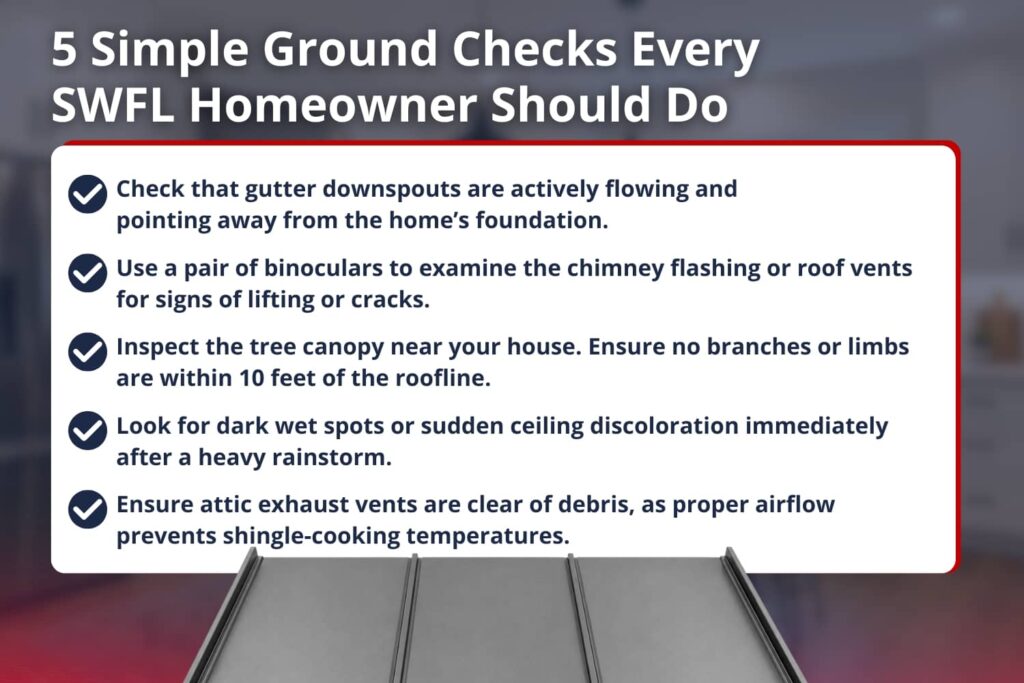
Managing home maintenance in Southwest Florida requires reliable local insights. While visual checks from your driveway give you a quick glimpse, they cannot replace a comprehensive roof and structural inspection.
You should contact a professional home inspector when:
- Your insurance provider sends a renewal letter requesting proof of roof condition or a 4-Point inspection.
- You are buying or selling a home in Fort Myers, Cape Coral, Naples, Bonita Springs, or surrounding SWFL areas.
- Your asphalt shingle roof is approaching 10 years of age, or your tile roof is reaching 15 years.
- You want to lower your annual homeowner insurance premiums by completing an updated Wind Mitigation inspection.
- You notice signs of wear, such as loose shingles, cracked tiles, or dark streaks on your ceiling after severe weather.
A certified local inspector provides an unbiased, highly detailed digital report complete with high-resolution photos. This gives you clear documentation to present to insurance agents, lenders, and contractors.
Conclusion
Navigating how the age of roof and insurance regulations connect does not have to be overwhelming. Staying proactive with accurate maintenance records, timely repairs, and professional inspection documentation helps protect your family, your investment, and your property value.
If you have questions about your roof condition, need a 4-Point inspection, or want to explore potential wind mitigation savings on your home, reach out to the experienced team at Accurate Home Inspectors of Florida today. Schedule your thorough inspection online or call our local team to get digital reports delivered fast!