
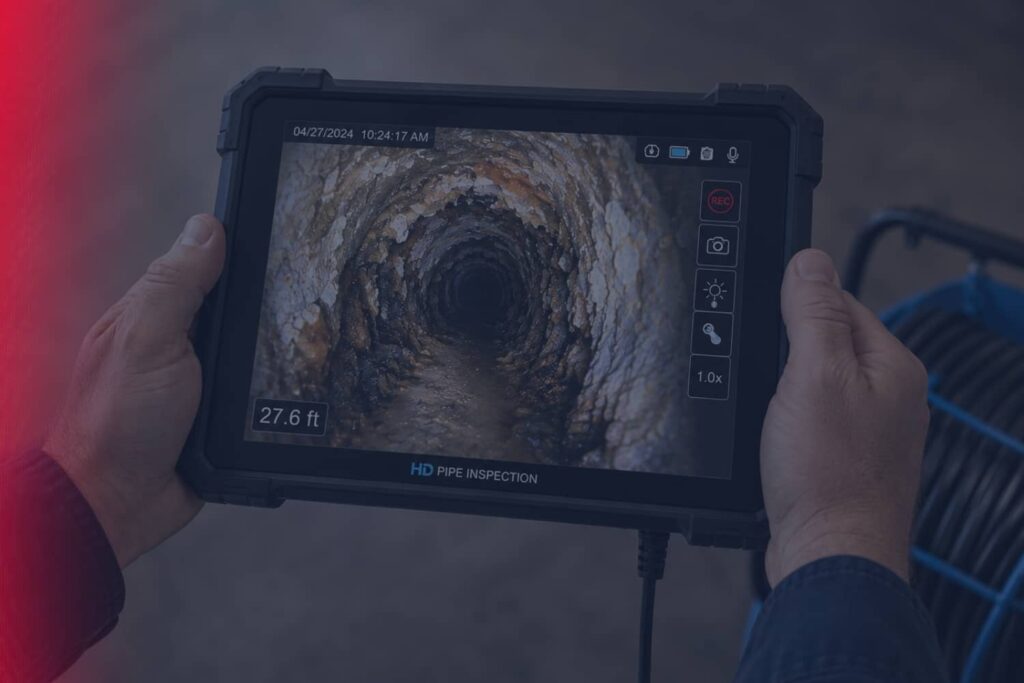
Southwest Florida homes built before 1975 often rely on cast iron plumbing buried deep underneath concrete slab foundations. While cast iron was once praised for its strength and sound-dampening qualities, these aging drain lines are reaching the end of their usable life. In humid, coastal climates like Fort Myers, Cape Coral, and Naples, cast iron plumbing degrades much faster than in other parts of the country.
Deteriorating waste lines can create hidden slab leaks, structural damage, health concerns, and severe financial surprises during a home purchase or insurance renewal. Knowing the risks associated with cast iron waste pipes helps property owners, buyers, and sellers make smart, proactive decisions before small plumbing issues turn into major structural disasters.
Why Does Cast Iron Plumbing Fail Faster in SW FL?
Cast iron plumbing fails in Southwest Florida primarily due to the local environment, soil conditions, and the natural chemistry of sewer gas. Cast iron drain lines installed decades ago were designed to last around 25 to 50 years.
Because most SWFL cast iron pipes were installed between the 1950s and mid-1970s, almost all of them have reached or exceeded their expected operational lifespan.
Florida’s environmental factors accelerate this decay process:
- High Water Tables and Moist Sandy Soil: SWFL sandy soil holds onto moisture from heavy seasonal rainstorms and high water tables. Constant ground moisture causes rust and oxidation along the outer walls of underground iron pipes.
- Internal Sewer Gas Corrosion: Wastewater produces hydrogen sulfide gas. Inside sealed pipes, this gas creates sulfuric acid, which eats away at the upper inner wall of the cast iron pipe.
- Bottom Channel Erosion: Water and debris constantly running along the bottom of the pipe wear away the metal, creating a flat, thin bottom channel that eventually breaks open completely.
- Coastal Salt Air: Salt air accelerates the oxidation process, causing iron materials to flake, crack, and break apart much sooner than in dry, inland climates.
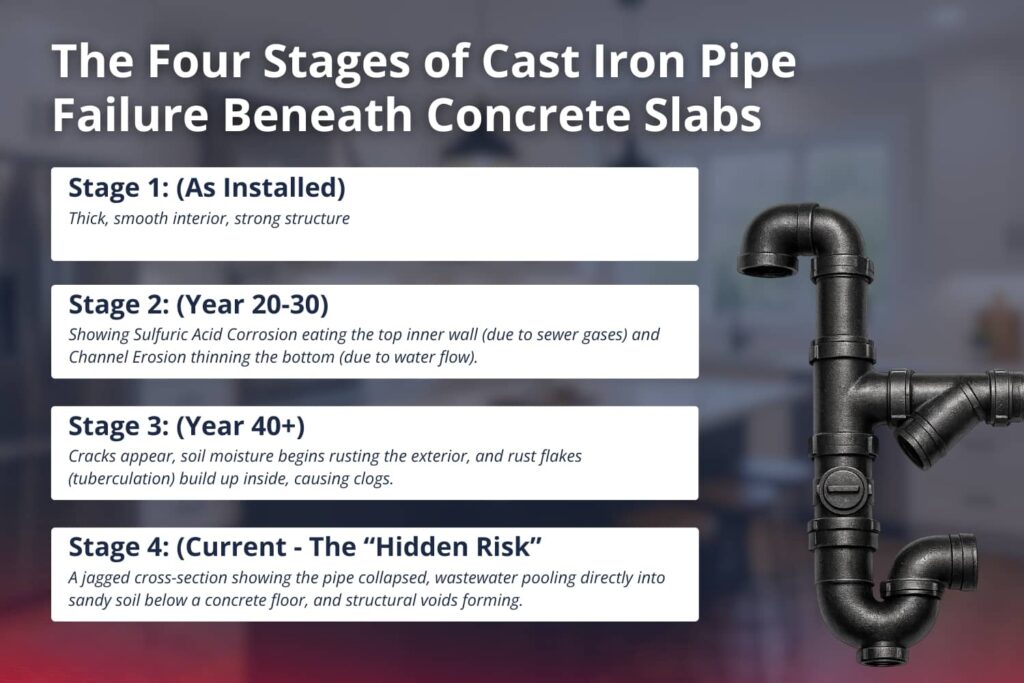
Left unchecked, this accelerated environmental decay quickly sets the stage for serious hidden hazards beneath your foundation.
The Top Hidden Risks of Failing Cast Iron Drain Lines
1. Undetected Slab Leaks and Foundation Damage
When a cast iron pipe rusts through under a home, wastewater spills directly into the dirt below the concrete foundation. Because these pipes are buried beneath concrete slabs, you might not see water accumulating right away.
Over time, leaking wastewater washes away the supporting sandy soil beneath the slab, creating vacant pockets. Without proper ground support, concrete foundations can crack, settle, or shift.
2. Raw Sewage Backups and Health Hazards
Corroding cast iron does not wear down smoothly. As the interior of the pipe rusts, it forms rough patches known as tuberculation. Toilet paper, solid waste, and grease catch on these rough edges. Repeated catches create stubborn blockages that force raw sewage back up into home sinks, showers, and toilets. Sewage backups introduce harmful bacteria, mold, and toxins into the living areas of your home.
3. Sub-Floor Moisture, Mold, and Flooring Damage
Leaking water under the slab works its way up through concrete via capillary action. This trapped moisture damages hardwood, warps laminate, cracks ceramic tiles, and creates damp carpet patches. In our warm, humid local climate, dark moisture beneath flooring creates ideal conditions for toxic mold growth inside living spaces.
4. Pest and Rodent Intrusions
Broken cast iron lines open a direct path from the underground main sewer into your home. Pests like palmetto bugs, drain flies, and rodents utilize cracked waste lines to enter houses. Persistent pest infestations in older Fort Myers or Naples neighborhoods can often be traced back to broken underground plumbing lines.
5. Sudden Financial Losses and Insurance Denial
Replacing broken cast iron pipes buried beneath a home is one of the most expensive property repairs a homeowner can face. Traditional repairs involve jackhammering up concrete floors, digging trenches through living spaces, replacing lines, and repouring concrete. Insurance carriers across Florida have grown increasingly reluctant to cover damages caused by cast iron pipes, leaving many homeowners paying out of pocket.
Catching these dangerous hazards early depends on knowing what warning signs to watch for inside and around your home.
Key Symptoms of Cast Iron Plumbing Failure
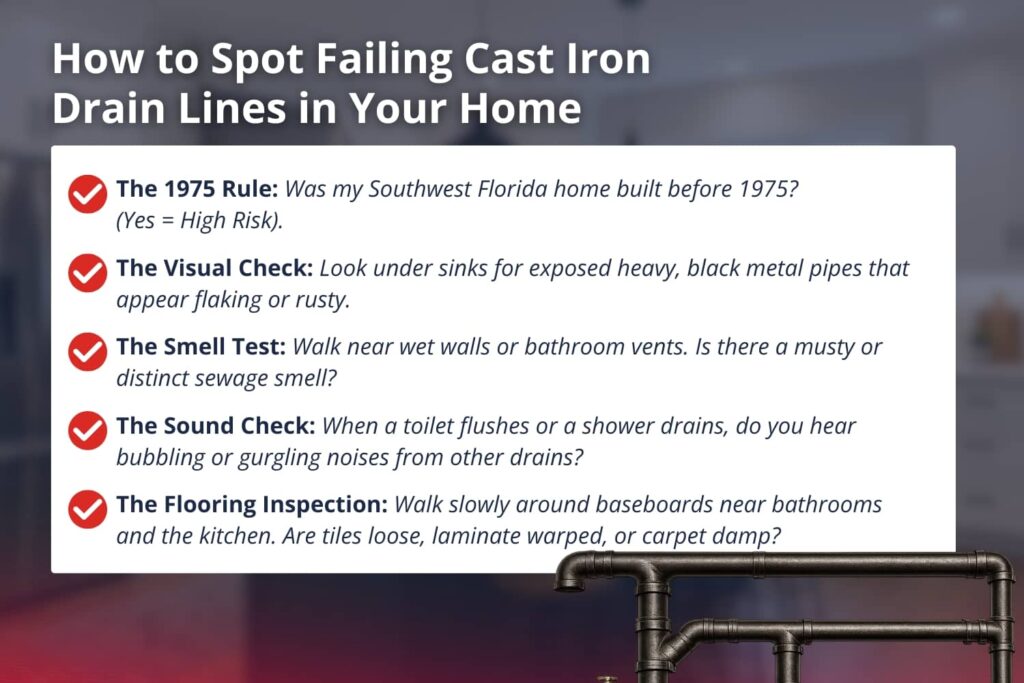
Identifying cast iron pipe deterioration early allows you to take action before structural damage occurs. Homeowners and prospective home buyers should watch for these common warning signs:
| Warning Sign | What It Indicates | Potential Hidden Risk |
| Frequent Sewer Line Clogs | Wastewater catching on rough, corroded pipe walls | Major sewage backup into showers and sinks |
| Sewer Gas Odors | Cracks or holes in the top section of the pipe | Toxic gas leaks and indoor pest entry |
| Gurgling Toilet Drain Lines | Restricted airflow and poor drainage flow | Imminent full blockage of main waste line |
| Sinking Lawn Patches | Underground pipe break leaking water into soil | Soil erosion beneath foundation or yard |
| Floor Discoloration / Moisture | Slab leak pushing water upward through concrete | Mold growth, ruined flooring, foundation shifts |
| Unexplained Pest Outbreaks | Open breaches in the main drain line | Continuous pest invasion path under slab |
Spotting these warning signs early helps protect your investment and prevents major complications during real estate transactions or insurance renewals.
How Cast Iron Pipe Issues Affect Home Sales and Insurance
Failing cast iron drain lines create major roadblocks during real estate transactions in Southwest Florida. Home insurance providers in Lee and Collier counties are strict regarding pipe age and material. Many insurance companies require a 4-point inspection before issuing or renewing a policy on homes over 20 years old. If an inspector identifies failing cast iron plumbing, insurers may demand pipe repairs before writing a policy, exclude water damage from coverage entirely, or charge significantly higher premiums.
For home buyers, discovering cast iron plumbing issues during the inspection contingency window offers critical leverage. Buyers can request seller repairs, ask for financial credits at closing, or renegotiate the purchase price to account for future pipe replacement costs. For sellers, addressing or disclosing the condition of cast iron plumbing upfront prevents deals from collapsing days before closing.
Comparing Cast Iron and Modern PVC Piping
Understanding how legacy cast iron compares to modern plumbing materials helps clarify why replacing or lining old pipes is often the best long-term investment.
| Feature / Characteristic | Cast Iron Piping | Modern PVC Piping |
| Average Lifespan | 25 to 50 years | 50 to 100+ years |
| Corrosion Resistance | Poor (Rusts from gas and water) | Excellent (Immune to rust/corrosion) |
| Interior Surface | Rough, prone to snagging debris | Smooth, high-flow rate |
| Soil Chemical Resistance | Low (Vulnerable to moist sandy soil) | High (Impervious to ground chemicals) |
| Pest Resistance | Low (Breaks allow pest access) | High (Sealed solid plastic joins) |
| Maintenance Needs | Frequent jetting, unclogging, root removal | Minimal routine maintenance |
Determining whether your property needs an upgrade starts with a comprehensive evaluation of your plumbing system by a certified inspector.
How Inspectors Evaluate Plumbing Systems
A comprehensive evaluation of a home’s plumbing goes far beyond turning on faucets and flushing toilets. Experienced home inspectors evaluate the full scope of a property’s functional systems to ensure every detail is documented clearly.
When inspecting older Southwest Florida properties, certified inspectors look for:
- Visual Pipe Identification: Checking exposed lines under sinks, in basements, or near cleanouts to identify pipe materials.
- Functional Flow Testing: Running multiple fixtures simultaneously to check for slow drains, back-ups, or pressure drops.
- Moisture Detection: Utilizing specialized thermal imaging or moisture meters along flooring and walls to locate active, hidden slab leaks.
- Sewer Scope Inspections: Feeding a high-resolution camera down through main waste lines to examine internal pipe walls for rust, cracks, offsets, collapses, and root intrusion.
Plumbing evaluations are most effective when paired with a complete top-to-bottom home inspection. Issues with underground plumbing can slowly affect foundation stability, wall framing, and surrounding electrical setups. Combining a plumbing system inspection with a detailed roof and structural inspection, electrical system evaluation, HVAC review, and exterior foundation review ensures you receive a complete, balanced picture of a home’s overall safety and structural health. Modern inspectors summarize these findings into clear, detailed digital reports filled with high-resolution photos and plain-language descriptions, giving buyers and owners total clarity.
Related Questions to Explore
What home inspections are required for insurance in Florida?
Insurance carriers in Florida typically require a 4-point inspection for homes over 20 years old. This evaluation examines four main areas: the roof, electrical system, HVAC setup, and plumbing condition. Passing this inspection confirms that critical safety components meet current insurance underwriting standards.
Can plumbing leaks cause structural foundation damage?
Yes, underground plumbing leaks can gradually wash away supporting soil beneath a concrete slab foundation. Over time, this soil erosion creates hollow pockets, leading to cracked tiles, shifting walls, and serious foundation settlement. An exterior and structural foundation review helps identify early signs of settlement before major damage occurs.
What is included in a complete plumbing system inspection?
A comprehensive plumbing system inspection evaluates visible supply lines, drain fixtures, water heaters, and main shut-off valves. Inspectors also test drainage speed, check water pressure, and utilize moisture detection tools to locate hidden leaks behind walls or beneath floors.
What should buyers look for in a home inspection report?
A thorough digital inspection report should feature clear photos, thermal images, and plain-language descriptions of any property issues. It highlights immediate repair needs, age estimates for major equipment, and potential red flags like aging electrical panels, roof wear, or deteriorating plumbing lines.
When to Call a Professional
Knowing when to schedule a professional evaluation can save thousands of dollars in unexpected home repairs. You should reach out to a professional home inspector if:
- You are planning to purchase or sell a Southwest Florida home built prior to 1975.
- You receive notice that your property insurance carrier requires a 4-point inspection or plumbing update.
- You experience recurring drain backups, unexplained sewer smells, or sudden flooring discoloration.
- You notice cracking along interior tile, baseboards, or exterior foundation walls near main wet walls.
- You want complete peace of mind regarding the structural and functional health of your property.
Protecting Your SWFL Home Investment
Cast iron plumbing served Florida homes well for generations, but time and coastal conditions have taken their toll. Ignoring the warning signs of deteriorating underground pipes can lead to ruined flooring, contaminated homes, and compromised slab foundations. Whether you are buying your dream home in Fort Myers, selling a property in Cape Coral, or managing a home in Naples, getting a complete evaluation of your property’s primary systems is essential.
Contact Accurate Home Inspectors of Florida today to schedule your comprehensive plumbing inspection and home evaluation. Our team delivers clear, easy-to-read, detailed digital reports that provide the full picture of your home’s condition, helping you make confident, informed real estate decisions.