
To test a GFCI outlet, plug in a lamp, press the TEST button (the lamp should shut off), then press RESET (the lamp should come back on). If the power cuts on TEST and returns on RESET, the outlet is protecting you.
If nothing happens, the GFCI may be dead and should be replaced. The whole check takes about 30 seconds, and doing it monthly is one of the simplest things you can do to prevent a shock in your kitchen, bathroom, garage, or any outdoor outlet. Here is exactly how to do it, plus what to do when the outlet won’t cooperate.
What Is a GFCI Outlet, and Why Does It Matter in Florida?
A GFCI (ground fault circuit interrupter) outlet is a safety device that watches the electricity flowing through a circuit and cuts power the instant it senses something wrong.
If as little as 0.006 amps starts leaking to ground, possibly through a person standing on a wet floor, the GFCI shuts the circuit off in milliseconds.
That is far faster and far more sensitive than a standard breaker, which is mainly there to stop fires and overloads rather than protect your body from a shock.
You can spot a GFCI by the two small buttons in the center of the outlet, usually marked TEST and RESET. Building codes require them anywhere water and electricity might meet: kitchens, bathrooms, garages, laundry rooms, basements, crawl spaces, and outdoor receptacles.
In Southwest Florida, GFCIs work harder than they do almost anywhere else. High humidity, salt air near the coast in Fort Myers and Naples, summer storms, and frequent power flickers all put extra stress on these devices.
After a lightning storm or a utility outage, a GFCI can quietly fail or trip, and you may not know until you reach for the outlet and nothing works. That is exactly why a quick monthly test matters here.
How to Test a GFCI Outlet in 4 Steps
You do not need any tools for the basic test. A small lamp or a phone charger with a light is enough.
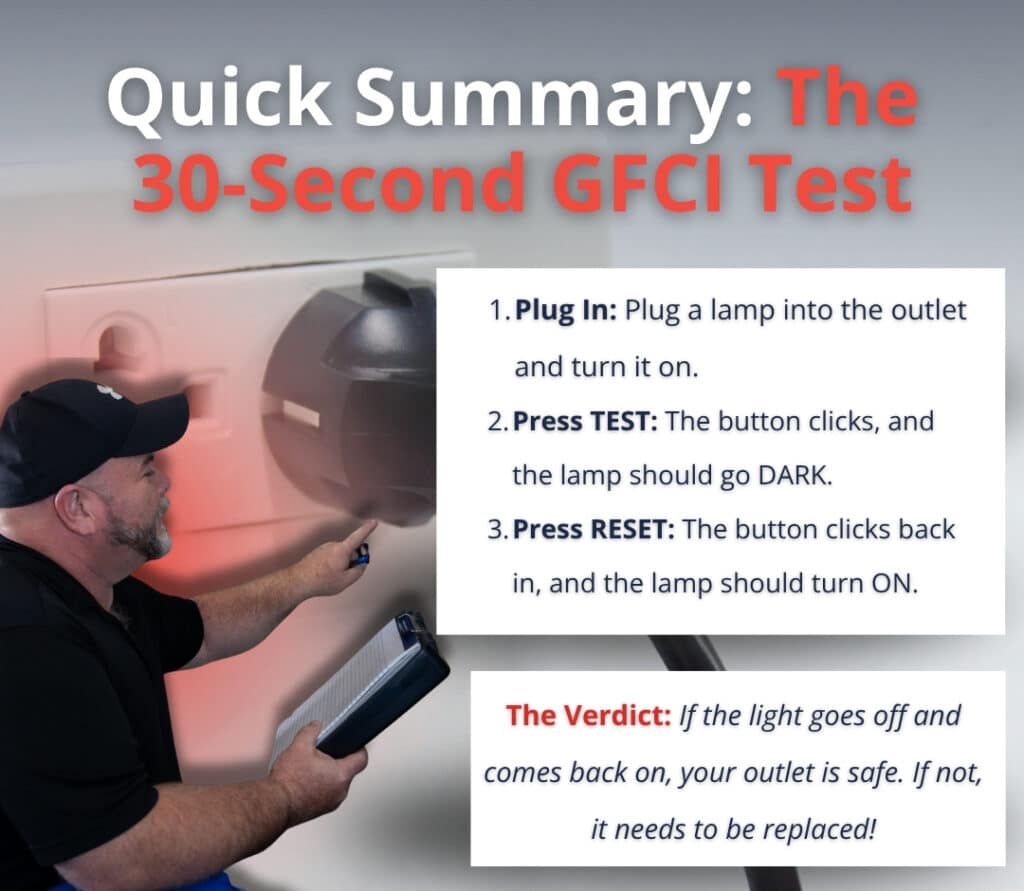
- Plug a lamp into the GFCI outlet and turn it on. Make sure the light is actually on so you have something to watch.
- Press the TEST button. You should hear a click, the RESET button should pop out, and the lamp should go dark. This means the GFCI sensed a (simulated) fault and cut the power as designed.
- Press the RESET button. It should click back in, and the lamp should turn on again. Power is now restored.
- Confirm the result. If the light went off on TEST and came back on RESET, your GFCI is working. If the light stayed on when you pressed TEST, the outlet is not protecting you and should be replaced by a licensed electrician.
What a passing test looks like
A healthy GFCI does two things in order: it kills power when you press TEST, and it restores power when you press RESET. If either step fails, treat the outlet as unsafe until it is checked.
For a wiring-level check, an inexpensive plug-in outlet tester with a GFCI button can also confirm the outlet is wired correctly, which is handy in older homes where receptacles are sometimes reversed.
How Often Should You Test a GFCI Outlet?
Test every GFCI in your home at least once a month. The U.S. Consumer Product Safety Commission recommends testing each GFCI after installation, monthly, and any time the power has gone out, as noted in the CPSC’s GFCI fact sheet.
In Florida, “after a power failure” comes up a lot, so it is worth adding a GFCI check to your routine after every storm season power blip.
Set a reminder for the first of the month and walk the house: kitchen, bathrooms, garage, laundry, and every exterior outlet.
Newer “self-test” GFCIs check themselves automatically, but the Electrical Safety Foundation International still recommends a manual test, since the ESFI’s home electrical safety guidance reinforces that these devices can wear out silently.
When Your GFCI Won’t Reset or Won’t Trip
Two problems come up most often, and they point in opposite directions.
The GFCI won’t reset (the RESET button won’t stay in). This usually means one of the following: there is no incoming power because an upstream breaker tripped, moisture has gotten into the outlet or circuit, a faulty appliance plugged downstream is causing a real fault, or the GFCI itself has failed. Try unplugging everything on the circuit, then reset. Check your breaker panel. If it still won’t reset with nothing plugged in, it is time for a professional.
The TEST button won’t trip the outlet. If pressing TEST does nothing and the power stays on, the protective circuitry is likely dead, or the outlet was miswired. Either way, it is no longer protecting anyone and needs to be replaced. A GFCI that won’t trip is more dangerous than one that won’t reset, because it gives you a false sense of safety.
GFCIs also “keep tripping” for legitimate reasons: moisture intrusion (common in Florida), an overloaded circuit, or a failing appliance. Frequent tripping is the outlet doing its job and telling you something on that circuit needs attention.
How GFCI Outlets Fit Into a Florida 4-Point Inspection
If you are buying, selling, or insuring an older home, GFCI protection is one of the electrical items an inspector looks at closely. During an inspection, we test accessible GFCI receptacles, confirm they are present where code requires them, and flag any that fail to trip or are missing in wet areas. Insurers in Florida pay particular attention to the electrical system, which is one of the four systems covered in a 4-point inspection, and when to get one.
GFCI testing also pairs naturally with the other safety checks a thorough inspection includes, from safe radon levels in your home to spotting the signs of termites in Florida homes. A failed GFCI on its own is an easy fix, but it is often a clue that the electrical system as a whole deserves a closer look.
Related Questions to Explore
How do I know if my GFCI outlet is working?
Plug in a lamp, press TEST, and watch the light. If it goes off when you press TEST and comes back on when you press RESET, the outlet is working. If the light stays on during the test, the GFCI is not protecting that circuit and should be replaced.
Can I test a GFCI without a lamp or tester?
Yes. Press the TEST button and listen for a click, and watch for the RESET button to pop out. That click means the device tripped. A plug-in outlet tester with a GFCI button gives you a more complete check. It also confirms the outlet is wired correctly, which is worth doing in older Florida homes.
Why do other outlets lose power when one GFCI trips?
A single GFCI often protects several “downstream” outlets wired after it on the same circuit. When the GFCI trips, every receptacle it protects loses power too. If a bathroom or outdoor outlet suddenly goes dead, look for a tripped GFCI nearby (sometimes in another room or the garage) and reset it.
Do GFCI outlets go bad over time?
Yes. GFCIs wear out, and many are replaced every 7 to 10 years, or sooner if they fail a monthly test. Florida’s heat and humidity can shorten that lifespan. If an outlet won’t trip on TEST or won’t reset, replacement is the safe answer.
When to Call a Professional
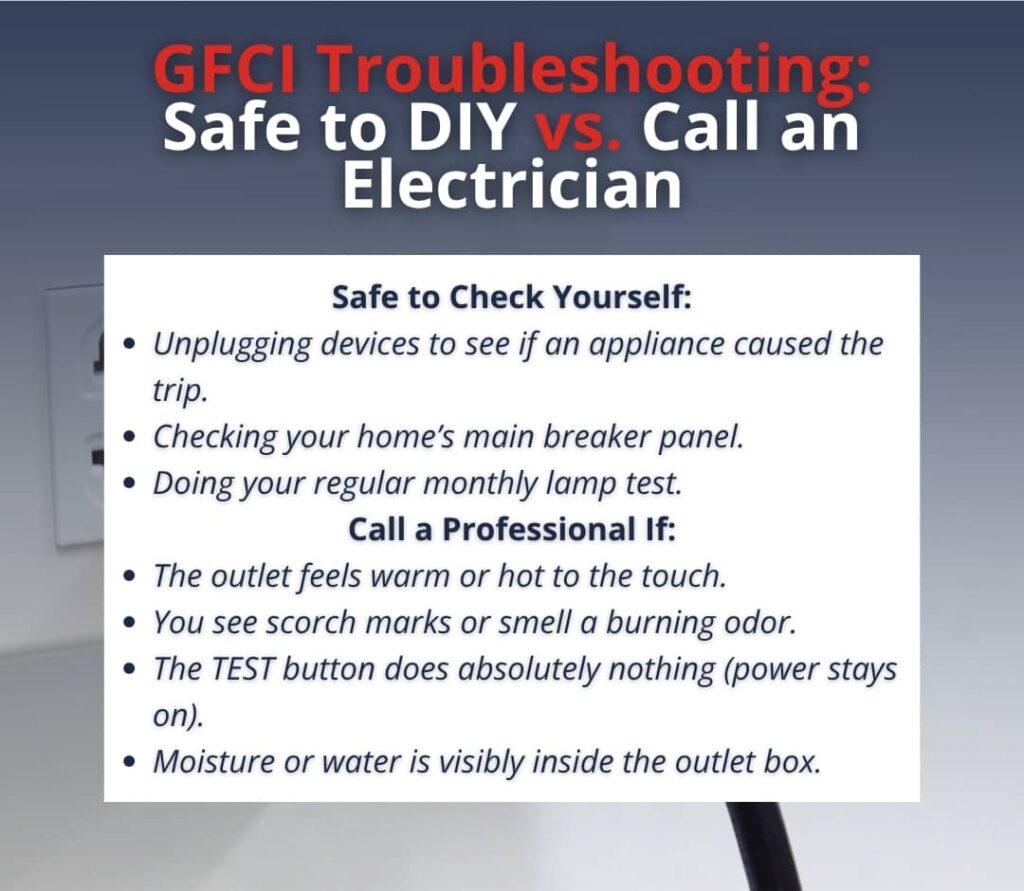
Test and reset are homeowner-friendly tasks. But stop and call a licensed electrician if any of these are true.
- The GFCI won’t trip when you press TEST
- It won’t reset even with nothing plugged in
- You see scorch marks or smell burning
- The outlet is warm to the touch
- Moisture is visibly getting into the receptacle
These point to a wiring fault or a failed device that needs hands-on diagnosis. If you are in the middle of a home purchase or getting ready to renew insurance, a home inspection is the better first step. An inspector will test the GFCIs throughout the home. They also document issues and put them in writing so you and your electrician know exactly where to start.
For homeowners across Lee, Collier, Charlotte, and Hendry Counties, the team at Accurate Home Inspectors of Florida can handle that.
Conclusion
Testing a GFCI outlet takes about 30 seconds, costs nothing, and is one of the most effective electrical safety habits a Florida homeowner can build. Plug in a lamp, press TEST, press RESET, and do it monthly and after every storm-season outage.
If an outlet won’t trip or won’t reset, treat it as unsafe and get it replaced.
When you are buying or insuring a home, those same outlets are part of the bigger electrical picture that an inspector reviews. To see how the electrical system fits alongside the roof, plumbing, and HVAC, read what a 4-point inspection covers and when to get one in Florida, or call Accurate Home Inspectors of Florida at (239) 887-5348 to schedule.