
If you’ve been shopping for a home in Southwest Florida, you’ve likely come across listings for both modular and manufactured homes. They can look nearly identical from the street, and the price points are often similar too.
But these two types of homes are built differently, classified differently, and treated very differently when it comes to financing, insurance, and resale value.
For buyers in Lee, Collier, Charlotte, and Hendry Counties, understanding the key differences between a modular vs manufactured home is not just a technicality.
It affects what a lender will approve, what your insurer will require, and what a home inspector needs to evaluate before you close. Because of that, this guide breaks down the key differences clearly so you can move forward with confidence.
What Is a Manufactured Home?
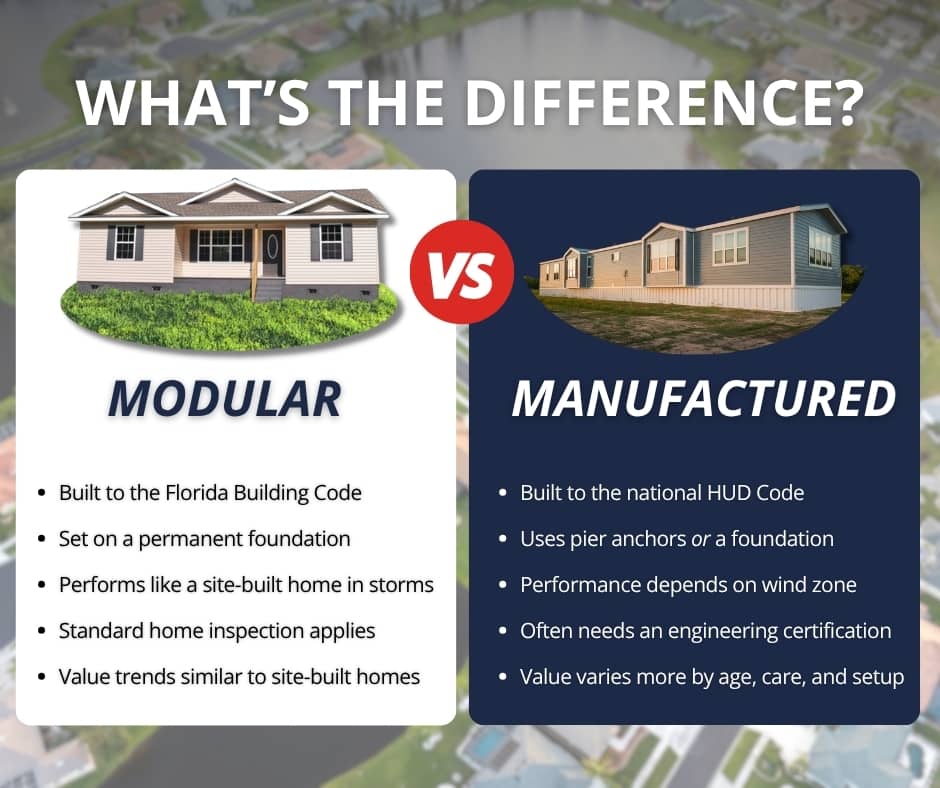
A manufactured home is built entirely in a factory and then delivered to its final location on a steel chassis. What officially makes a home “manufactured” is the building code it was constructed under: the HUD Code, a federal standard established by the Department of Housing and Urban Development in 1976.
The HUD Code covers structural design, energy efficiency, fire safety, and wind resistance. Every manufactured home built under this standard carries a HUD data plate inside and a certification label on the exterior of each section.
Manufactured homes come in single-wide, double-wide, and triple-wide configurations, and homeowners can place them on a permanent foundation or on pier-and-beam supports.
However, one of the most important distinctions for buyers is how the home is titled. A manufactured home can be classified as personal property or real property depending on how it is set up, and that classification has a direct impact on your mortgage options.
In Southwest Florida, manufactured homes are common throughout Lee and Collier Counties, with options ranging from land-owned lots to land-lease communities in Fort Myers, Cape Coral, and Lehigh Acres.
What Is a Modular Home?
Workers also build modular homes indoors in a factory-controlled environment, but they follow local building codes and the International Residential Code rather than the HUD Code.
In Florida, that means modular construction meets Florida Building Code requirements, the same standards that apply to traditional site-built homes.
Builders deliver modular homes to the site in sections and assemble them on a permanent foundation. Once complete, the law treats a modular home as real property, the same way it treats a stick-built home.
It receives a traditional certificate of occupancy, qualifies for conventional mortgage financing, and appraises like any site-built house.
From the outside, and often from the inside, a modular home is virtually indistinguishable from traditional construction. The difference is in the process and the code, not necessarily in the floor plan, the quality materials, or the finished look.
Modular vs Manufactured Home: Key Differences at a Glance
| Feature | Manufactured Home | Modular Home |
|---|---|---|
| Building Code | HUD Code (federal) | Florida Building Code / IRC |
| Foundation | Pier-and-beam or permanent | Permanent foundation required |
| Legal Classification | Personal or real property | Real property |
| Financing | Specialized lenders; limited options | Conventional mortgage available |
| Insurance | Specialized policies often required | Standard homeowners insurance |
| Resale Value | Varies; slower on leased land | Appreciates like site-built homes |
| HUD Label | Yes | No |
| Delivered in Sections | Yes | Yes |
How Florida’s Climate Affects Both Home Types
This is where things get especially relevant for Southwest Florida buyers. Lee and Collier Counties fall within Wind Zone III, the highest category for wind load requirements under HUD standards.
Manufacturers should build any manufactured home for this area to Wind Zone III specs. Older homes built before the 1994 HUD updates may not meet current wind resistance requirements, which directly affects insurability and extra cost at renewal time.
Modular homes following the Florida Building Code already meet state hurricane and wind-load requirements for their specific installation sites. That built-in compliance is a meaningful advantage for buyers along the Gulf Coast.
Flooding is another factor throughout this region. How crews elevate a home and whether owners permanently affix it to its foundation both affect flood insurance requirements for both home types.
A qualified inspector can help you evaluate this before you commit.
Financing and Mortgage Considerations
Financing is one of the biggest practical differences between modular and manufactured homes, and it matters from day one.
Manufactured homes can be financed through FHA Title I and Title II loans, VA loans, USDA loans in qualifying rural areas, and chattel loans for homes on leased land.
However, most banks require the home to be on a permanent foundation and titled as real property to qualify for government-backed programs.
A home still classified as personal property typically only qualifies for a chattel loan, which carries higher rates and shorter terms. A construction loan is generally not available for manufactured homes the same way it would be for site-built construction.
Modular homes are treated as real property from the start. Buyers can use conventional mortgages, FHA, VA, or USDA loans without the extra classification hurdles.
Lenders evaluate them the same way they evaluate traditional site-built homes.
If you are working with a specific budget or lender, confirming how a home is titled and what loan products apply should happen before you make an offer.
How These Homes Are Inspected
A home inspection is a critical step for any purchase, and manufactured and modular homes each have their own considerations.
For manufactured homes, inspectors look closely at:
- The HUD data plate and certification label to verify wind zone rating and code compliance
- The steel chassis and undercarriage for rust or structural compromise
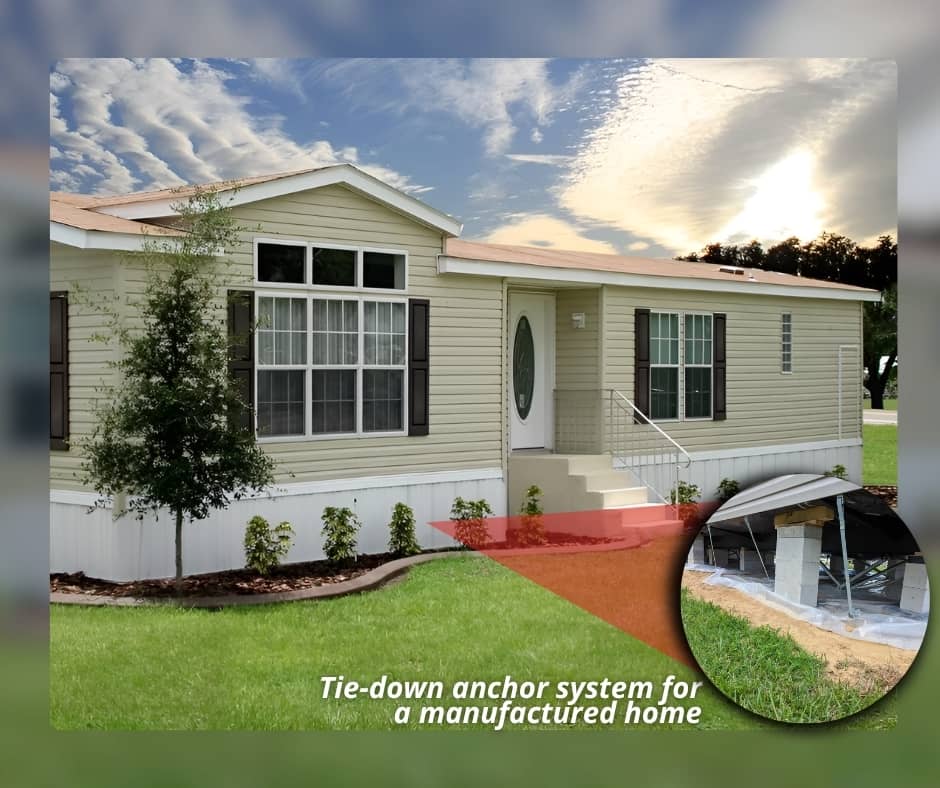
- Foundation type and tie-down anchoring systems, which are essential in Florida’s wind environment
- Vapor barriers beneath the home in our humid Southwest Florida climate
- Moisture intrusion, soft flooring, or deterioration around the perimeter
- HVAC ductwork, which in manufactured homes often runs through the floor rather than the attic
For modular homes, the inspection follows the same standards as site-built houses, covering the roof, structure, electrical, plumbing, HVAC, and foundation. The inspector also confirms that the marriage wall tightly joins the modules and blocks moisture.
In both cases, a pre-purchase inspection gives you a clear, unbiased picture of the property’s condition before closing. In Southwest Florida, where humidity, salt air, and storm history take a real toll on any home, that information is especially valuable.
Insurance Differences Buyers Should Know
Standard homeowners’ insurance policies typically do not cover manufactured homes. Buyers usually need a specialized policy, and carriers will often require documentation on the home’s tie-down system, foundation type, and age.
Homes built before 1994 can be particularly difficult to insure in Florida’s current market.
Modular homes qualify for standard homeowners insurance, and insurers rate them the same way they rate traditional site-built construction.
Florida-specific factors like wind mitigation and flood zone designation still apply, but the process is more straightforward.
Insurance companies may require an inspection before issuing a policy to manufactured home buyers. Completing that early in the transaction helps avoid delays at closing.
Resale Value and Long-Term Factors
Manufactured homes tend to appreciate more slowly, particularly when placed on leased land and classified as personal property.
Manufactured homes on owned land with a permanent foundation tend to perform more like traditional homes over time, though community rules, home age, and local market conditions all factor in.
Modular homes generally appreciate in line with surrounding real estate values, similar to stick-built homes. In growing Southwest Florida communities, that long-term equity potential is worth considering.
Buyers should also verify HOA or community rules before making an offer. Some Fort Myers, Naples, and Bonita Springs neighborhoods dictate the home types residents may install within their boundaries.
Common Questions From Buyers
What does a home inspection actually cover?
A standard home inspection evaluates the roof, structure, foundation, electrical, plumbing, HVAC, and exterior of a property. The goal is to give buyers a clear picture of the home’s condition before closing so there are no costly surprises after the fact.
What is a pre-purchase inspection, and do I need one?
A pre-purchase inspection is a thorough evaluation of a property completed before you finalize the purchase. It applies to any home type, including manufactured and modular, and gives buyers documented evidence of the home’s condition to use in negotiations or repair requests.
What is a new construction inspection?
Even newly built homes can have defects. A new construction inspection is an independent review completed before your final builder walkthrough. It catches workmanship issues, improper installations, and anything that should be addressed before you take ownership.
What is an insurance inspection, and when is it required?
An insurance inspection documents the condition of a home so a carrier can underwrite a policy. In Florida, this is commonly required for manufactured homes and older properties. It typically covers the roof, structure, electrical, and any features relevant to the insurer’s risk assessment.
How does Southwest Florida’s climate affect a home inspection?
Humidity, salt air, and storm exposure are facts of life in Lee, Collier, Charlotte, and Hendry Counties. Inspectors familiar with this region know where to look for moisture intrusion, corrosion, wind damage, and other climate-related issues that buyers in other parts of the country may never encounter.
When to Call a Professional
Reach out for a professional home inspection before closing if:
- You are purchasing a manufactured home and need HUD compliance, wind zone, and chassis condition verified
- The home is 10 years old or more
- The property has been vacant, and you want to assess moisture and system condition
- An insurance inspection is required before your policy can be issued
- You are buying a new modular home and want an independent review before final sign-off
Conclusion
The modular vs manufactured home question comes down to how each is built, coded, classified, and treated by lenders and insurers.
Both can be quality homes and affordable options for buyers throughout Southwest Florida. Understanding the key differences helps you make the right decision for your budget, your goals, and the specific property you’re considering.
If you are buying, selling, or insuring a home in Fort Myers, Naples, Bonita Springs, Cape Coral, or anywhere in Lee, Collier, Charlotte, or Hendry County, Accurate Home Inspectors of Florida is ready to help. We deliver thorough, certified inspections with same-day or 24-hour report delivery.
Schedule your inspection today, contact us online, or call to get started.