
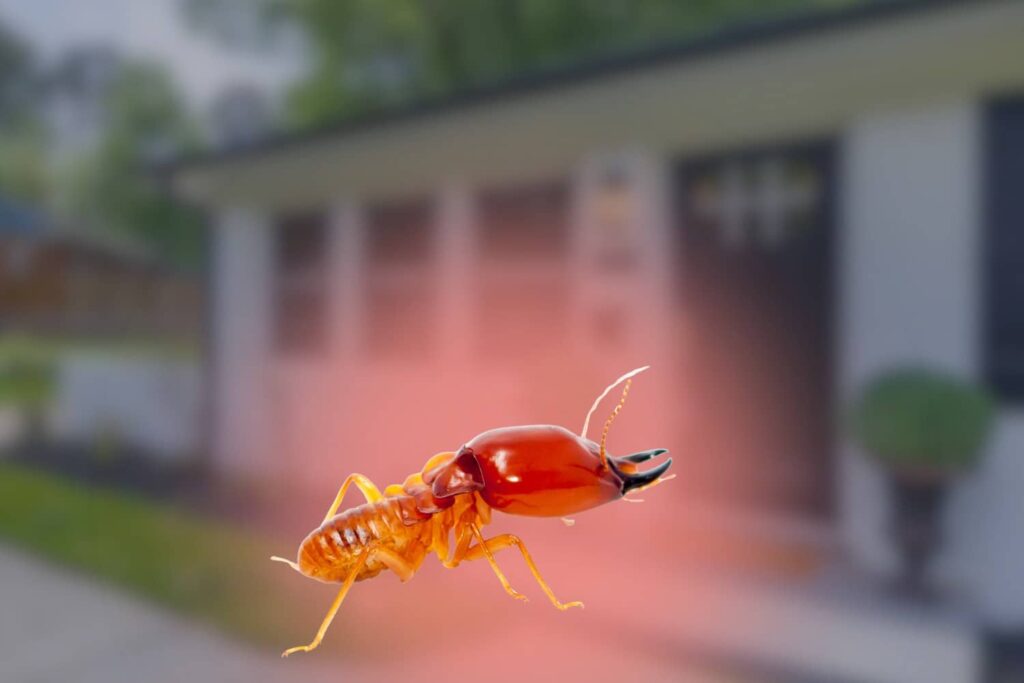
What do termites look like in Florida homes? The most common signs include mud tubes along the foundation, small pellet-like droppings called frass, discarded wings near doors and windows, and wood that sounds hollow when tapped. Most homeowners never see the termites themselves, only the evidence they leave behind.
Florida is one of the most termite-active states in the country. The warm, humid climate supports multiple species year-round, and termites cost Florida homeowners more than $500 million in damage each year. Because termites work silently inside walls, floors, and framing, many infestations go undetected for months or years.
Knowing what to look for can save you thousands. If you are buying or selling a home in Southwest Florida, a thorough inspection by Accurate Home Inspectors of Florida is one of the best ways to catch termite activity before it becomes a major problem.
The Most Common Types of Termites in Florida
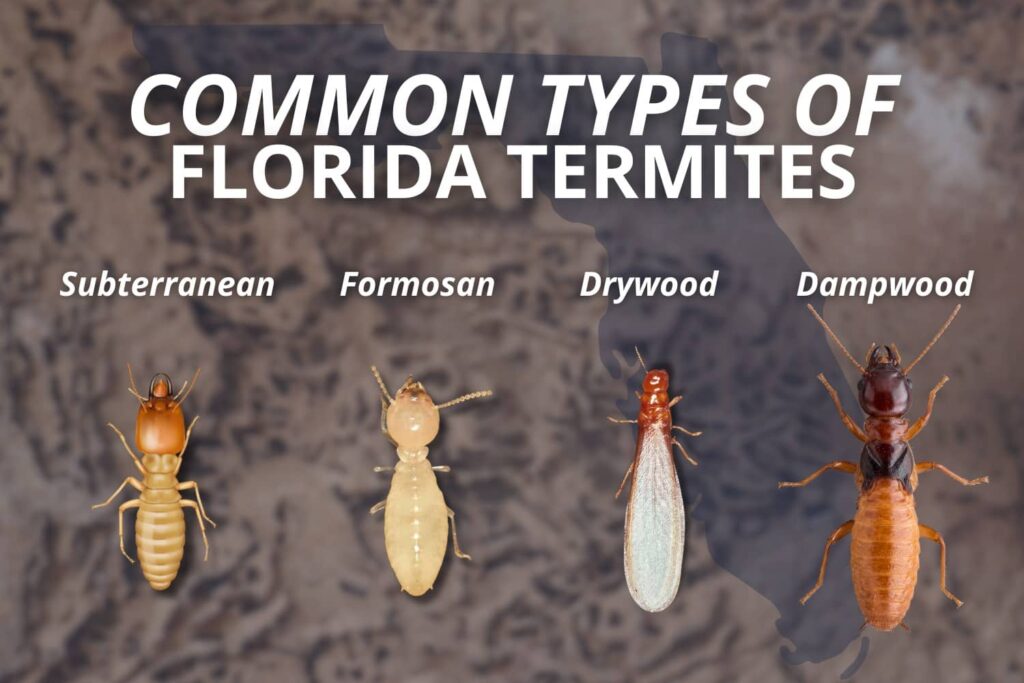
Florida is home to around 20 termite species, but four are responsible for most of the damage to homes. Knowing which type you are dealing with changes how you spot them and what treatment is needed.
Subterranean Termites
Subterranean termites are the most common species in Florida and cause the most structural damage. They live in underground colonies and build pencil-sized mud tubes to travel between the soil and the wood they feed on.
Workers are cream-colored and rarely seen; soldiers have rectangular brown heads. Eastern subterranean termites swarm during the day, typically between October and February.
Drywood Termites
Drywood termites live entirely inside the wood they eat, with no soil contact needed. They are harder to detect early because they leave no mud tubes. The main giveaway is frass: tiny, pellet-like droppings pushed out through small kick-out holes in the wood surface.
They frequently infest attics, door frames, siding, and wooden furniture. Drywood termites are yellowish-brown and smaller than subterranean workers.
Formosan Termites
Formosan termites are a subterranean species sometimes called the “super termite.” Their colonies can number in the millions, and they are capable of destroying homes in months rather than years. They produce large mud tubes and may also build carton nests inside wall voids.
Formosan swarmers are yellowish and typically appear at dusk from May through June. If you see a large swarm near your home at night, Formosan termites are a top suspect.
Dampwood Termites
Dampwood termites are larger than the other species and target wood with high moisture content, such as wood near plumbing leaks, rotting sills, or wood in contact with soil. They do not usually infest structurally sound, dry wood.
Their presence often signals an underlying moisture or drainage problem. Dampwood termites are attracted to lights left on at night, which can help identify their activity during swarming season.
What Do Termite Signs Look Like in Your Home?
So, what exactly do termites look like in Florida homes? You are far more likely to find evidence of termites than the insects themselves.
Here is what each sign looks like and where to find it.
| Sign | What It Looks Like | Where to Find It |
| Mud tubes | Brown, pencil-sized earthen tunnels | Foundation, crawl space walls, baseboards |
| Frass | Tiny oval pellets, like coffee grounds | Under window sills, baseboards, furniture |
| Discarded wings | Small translucent wings in piles | Windowsills, door frames, light fixtures |
| Hollow wood | Wood sounds papery or empty when tapped | Door frames, baseboards, floor joists |
| Blistering paint | Paint bubbles or peels without water damage | Interior walls, window frames |
| Warped doors/windows | Doors or windows stick unexpectedly | Entry doors, interior doors |
Mud Tubes Along Your Foundation
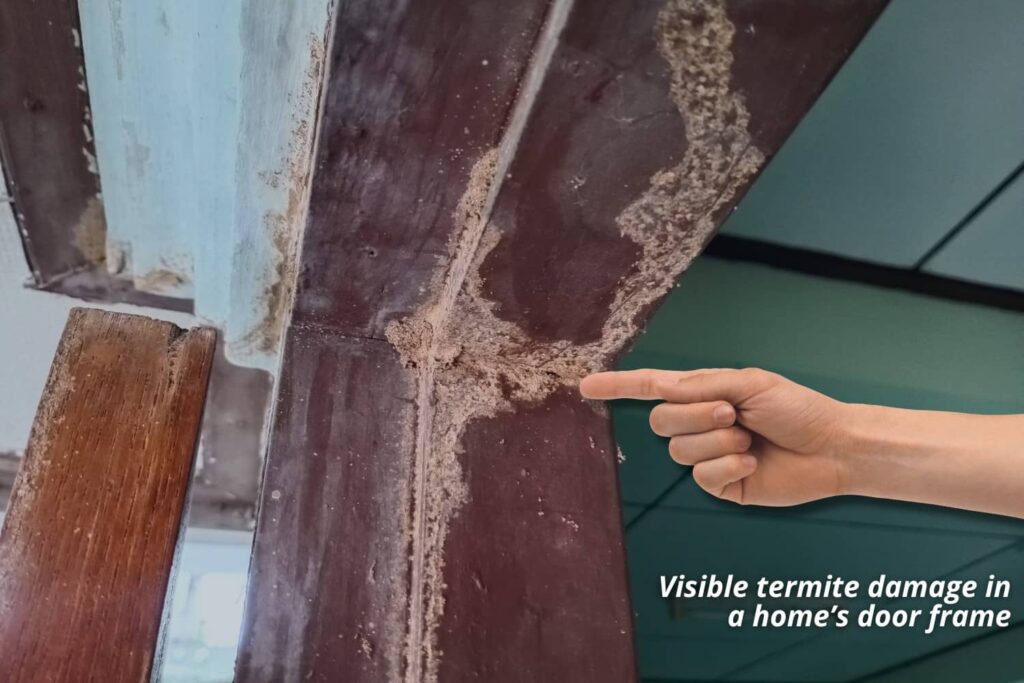
Mud tubes are the signature sign of subterranean and Formosan termites. These narrow tunnels are made from soil, wood particles, and termite saliva. They protect termites from light and dehydration as they travel between their underground colony and a wood food source.
You will find them running vertically along your foundation, inside crawl spaces, behind insulation, or on the surface of concrete block walls. Some tubes run inside walls and are invisible from the outside until significant damage has already occurred.
If you spot a mud tube, you can break a section open to check for live termites. Even if the tube appears dry or empty, do not assume the colony is gone. Termites often abandon one tube and build another nearby.
Frass (Termite Droppings)
Frass is the calling card of drywood termites. Unlike subterranean termites, which use their droppings to build tunnels, drywood termites push waste out through tiny kick-out holes in infested wood. The result is a small pile of oval pellets that looks like coffee grounds, coarse sand, or sawdust.
Each pellet is about one millimeter long with ridged edges. You might find frass under window sills, beneath baseboards, in corners of closets, or below wooden furniture. The piles reappear quickly after cleanup, which confirms active feeding.
A common mistake is confusing frass with sawdust from a construction project or with dirt blown in from outside. Frass has a consistent pellet shape. Sawdust is irregular. If you are unsure, a professional WDO inspector can confirm the difference on the spot.
Discarded Wings Near Doors and Windows
Swarmers are reproductive termites that leave the colony to mate and start new ones. After mating, they shed their wings. Finding small piles of translucent wings near window sills, door frames, sliding glass doors, or indoor light fixtures is one of the clearest signs of a nearby or active termite colony.
Termite wings are equal in length on both pairs, which helps distinguish them from flying ants (more on that below). A pile of wings indoors almost always means the swarm originated inside the structure, not just from the yard.
Hollow-Sounding or Damaged Wood
Termites eat wood from the inside out, leaving a thin outer shell intact. Tapping on door frames, baseboards, floor joists, or trim with a screwdriver handle can reveal hollow or papery areas where the interior has been consumed. In advanced infestations, a screwdriver will punch through the surface with almost no resistance.
Termite galleries (the tunnels termites chew through wood) may be visible if you break open a damaged piece. Subterranean termite galleries follow the grain of the wood and are packed with mud. Drywood termite galleries are clean and smooth, without the soil material.
Blistering Paint, Warped Doors, and Sagging Floors
Termite activity behind walls creates moisture as a byproduct of feeding. This can cause paint to bubble or blister in a pattern that mimics water damage. Doors and windows may start sticking or become hard to open and close. Floors may develop a slight sag or bounce where structural wood underneath has been weakened.
These signs are easy to misread. Many homeowners attribute them to humidity or minor settling. In Florida, where both humidity and termites are facts of life, any of these symptoms without an obvious cause is worth investigating.
Termites vs. Flying Ants: How to Tell Them Apart
Swarmers are the termite form most likely to be seen, and they are frequently mistaken for flying ants. The difference matters because flying ants are a nuisance, while termite swarmers mean a colony is nearby or already established inside your home.
| Feature | Termite Swarmer | Flying Ant |
| Antennae | Straight | Bent / elbowed |
| Wings | Equal length, both pairs are the same size | Unequal: front wings larger than back |
| Waist | Thick, no pinch | Pinched, narrow |
| Body color | Pale to dark brown | Black, dark brown, or reddish |
If you find what looks like flying ants inside the house, check the wings and waist before assuming. A quick photo and a call to a certified inspector can confirm the species within minutes.
When Do Termites Swarm in Florida?
Florida’s climate means termites can swarm almost year-round, unlike in northern states, where activity is limited to spring. Each species has its own swarming window:
- Eastern subterranean termites: Swarm during daylight hours, October through February
- Formosan termites: Swarm at dusk, May through June
- Powderpost drywood termites: Swarm during daylight hours in late summer and fall
- Dampwood termites: Swarm at night, spring and summer
Seeing swarmers does not necessarily mean they came from inside your home. They can travel from neighboring properties. But if swarmers are found indoors, or if you find discarded wings inside the house, the origin is almost certainly internal.
What Does Termite Damage Look Like Over Time?
Early termite damage can be nearly invisible. A colony may be active for one to five years before a homeowner notices anything. By the time signs become obvious, repair costs can run into the thousands.
The progression typically looks like this:
- Early stage: Small frass piles or a single mud tube on the exterior. No structural damage yet.
- Mid stage: Hollow-sounding wood, bubbling paint, or doors starting to stick. Limited damage is present but confined.
- Advanced stage: Visible wood tunneling, sagging floors, and crumbling structural members. Repairs may involve full beam or joist replacement.
Termites cost Florida homeowners more than $500 million annually, and damage is rarely covered by standard homeowner’s insurance. Catching an infestation early is almost always a fraction of the cost of repairing late-stage damage.
Related Questions to Explore
Can you see termites with the naked eye? Yes, but it is rare. Termites are roughly 1/8 to 1 inch long and are visible, but they actively avoid light and stay inside wood or soil. Most homeowners never see live termites during an infestation. What you typically see are the signs they leave: mud tubes, frass, discarded wings, or swarmer activity. A professional inspector uses probes, moisture meters, and trained observation to locate activity that is invisible to the average homeowner.
What does termite frass look like vs. sawdust? Termite frass consists of small, uniform oval pellets about one millimeter long with six ridged sides. Sawdust is irregular, fibrous, and varied in size. Frass is also a consistent tan-to-brown color and tends to form a neat cone or pile directly below the kick-out hole. If piles reappear within a day or two of being swept up, that is a strong sign of active drywood termite feeding.
Do termites bite humans? Termites can bite, but it almost never happens. Soldier termites have mandibles designed to defend the colony, not to attack people. Termites do not feed on human tissue and have no reason to target people. The real danger from termites is structural: the wood-destroying damage they do to your home over months and years, not any direct physical threat to occupants.
Can a home inspector find termites during a standard inspection? Standard home inspections cover visible structural and mechanical components, but termite inspections are typically a separate service. A WDO (wood-destroying organism) inspection is performed by a licensed inspector trained specifically in termite identification and structural damage assessment.
When to Call a Professional
Any of the following is enough reason to schedule a WDO inspection:
- You found mud tubes, frass, or discarded wings anywhere in the home
- Doors or windows that previously opened smoothly have started sticking
- You tapped on wood and heard a hollow or papery sound
- You are in the process of buying or selling a home in Southwest Florida
- It has been more than two years since your last termite inspection
- You live near a previous infestation or in a high-moisture area
A licensed WDO inspector does more than look for live termites. They identify conducive conditions (moisture intrusion, wood-to-soil contact, inadequate ventilation), assess the extent of any existing damage, and provide a report you can use for negotiations, insurance, or treatment planning.
Do not disturb mud tubes or frass piles before an inspection. Poking at tubes can cause the colony to relocate deeper into the structure, making detection harder. Photograph what you found, note the location, and let the inspector assess.
Accurate Home Inspectors of Florida serves Lee, Collier, Charlotte, and Hendry Counties.
Conclusion
Termites are active year-round in Florida, and most homeowners do not find out until the damage is already done. But what do termites look like in Florida homes? Here is what to keep in mind:
- The main signs to look for are mud tubes, frass, discarded wings, hollow wood, and blistering paint or sticking doors
- Florida has four major termite species, each with different signs and behavior patterns
- Termite damage is rarely covered by homeowner’s insurance, making early detection critical
- A WDO inspection is a separate service from a standard home inspection and is worth scheduling annually in Florida
If you spotted something that looks like any of the signs above, do not wait. Contact Accurate Home Inspectors of Florida to book your inspection in Fort Myers, Naples, Bonita Springs, or the surrounding Southwest Florida area.