

A 4-point inspection in Florida isn’t the same as a general home inspection, and it’s not something your insurance company will request just to create extra work. It’s a focused look at four specific systems: the roof, electrical, plumbing, and HVAC. If any of those systems are outdated or showing signs of failure, it can directly affect your ability to get or keep homeowners’ insurance.
Whether you’re buying a home in Fort Myers, renewing a policy in Naples, or just trying to figure out why your agent keeps requesting paperwork, this guide covers exactly what a 4-point inspection includes, when you’ll need one, and how to prepare.
What Is a 4 Point Inspection in Florida?
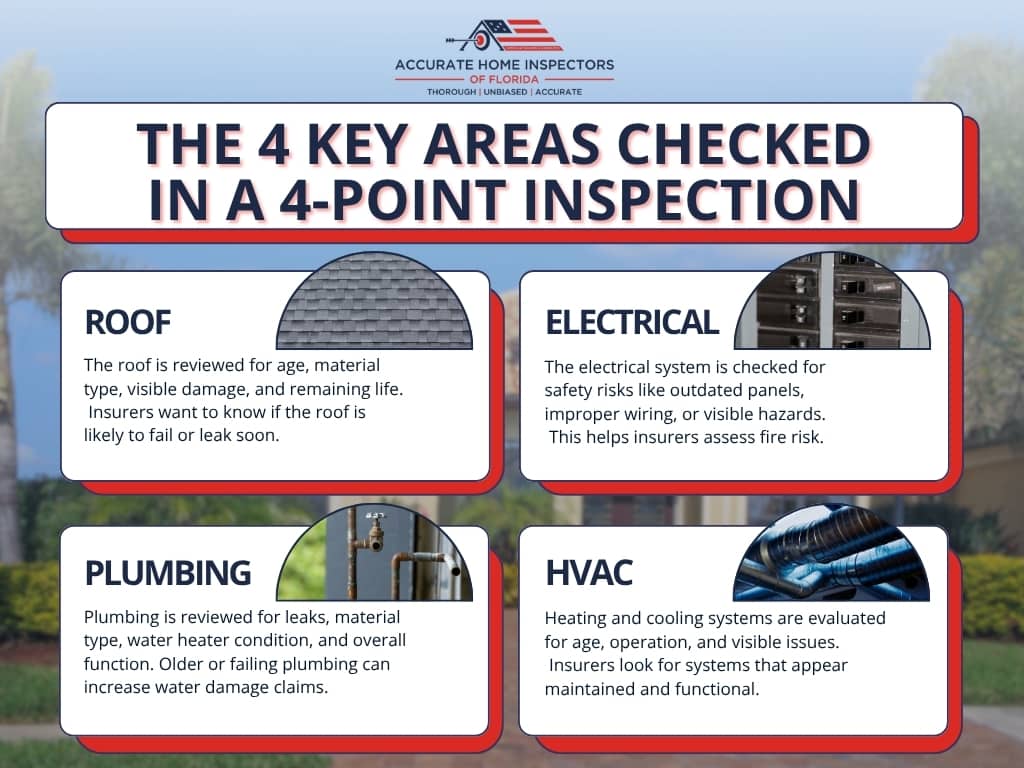
A 4-point inspection evaluates four critical systems in your home: the roof, electrical wiring and panels, plumbing, and HVAC.
It was designed specifically for the insurance market to help carriers assess risk before issuing or renewing a homeowners policy. Unlike a full home inspection, which covers everything from the foundation to the attic, a 4-point inspection is narrower in scope.
It skips cosmetic issues, structural assessments, and appliance checks. The goal is to verify that these four systems are in acceptable working condition and won’t pose a significant risk of failure or damage.
Between hurricanes, coastal salt air, year-round humidity, and aging housing stock across Southwest Florida, insurers face higher claim exposure here than in most other states. This inspection gives them a quick, standardized snapshot of the home’s most vulnerable systems.
The Four Systems Covered in a 4 Point Inspection
Your 4-point inspection will get the full picture of all of the home’s major systems. That way, your inspector can provide you with a detailed report to help you plan the next steps.
Roof
The roof is often the most scrutinized piece of the inspection, especially here in Southwest Florida. The inspector documents the covering type (shingle, tile, metal, or flat), approximate age, overall condition, and any signs of leaks, missing materials, or deterioration.
Many insurance carriers won’t write a new policy on a shingle roof that’s more than 15 to 20 years old, and some are tightening that threshold even further. Active leaks or significant wear will almost always trigger a coverage denial.
Electrical
This section covers wiring type, panel brand and condition, and amperage. Inspectors will note whether the home uses copper, aluminum, or an older system like knob-and-tube wiring.
Certain panel brands are automatic red flags. Federal Pacific, Zinsco, and some Challenger panels have documented fire hazard histories, and most carriers won’t insure a home with one still in place. Aluminum branch wiring may require remediation documentation from a licensed electrician before a policy can be issued.
Plumbing
The inspector evaluates supply and drain line materials, water heater age and condition, and any visible leaks or water damage. Common pipe materials include copper, PVC, CPVC, galvanized steel, and polybutylene.
Polybutylene pipes are a major concern because they’re prone to sudden failure. Many Florida homes built between the late 1970s and mid-1990s still have them. Water heaters older than 15 years or showing signs of rust and leaking are also commonly flagged.
HVAC
In Southwest Florida, air conditioning runs for much of the year, so insurers pay close attention here. The inspector notes the brand, approximate age, and whether the system shows signs of blockage, leaks, or condensation issues around the drain pan or air handler.
Systems older than about 13 to 15 years often raise concerns, particularly if there’s visible water damage nearby or a blocked condensate line creating moisture and mold risk.
Quick Reference: What Inspectors Look For
| System | Key Items Inspected | Common Red Flags |
| Roof | Material, age, condition, leaks | Shingle roofs that are over 15 to 20 years old, have active leaks, and are missing materials |
| Electrical | Panel brand, wiring type, amperage | Federal Pacific or Zinsco panels, aluminum wiring, knob-and-tube |
| Plumbing | Pipe material, water heater age, leaks | Polybutylene pipes, galvanized steel, water heater over 15 years old |
| HVAC | Age, condition, drain pan, condensate | Units over 13 to 15 years, blocked condensate lines, and water damage |
When Do You Need a 4 Point Inspection?
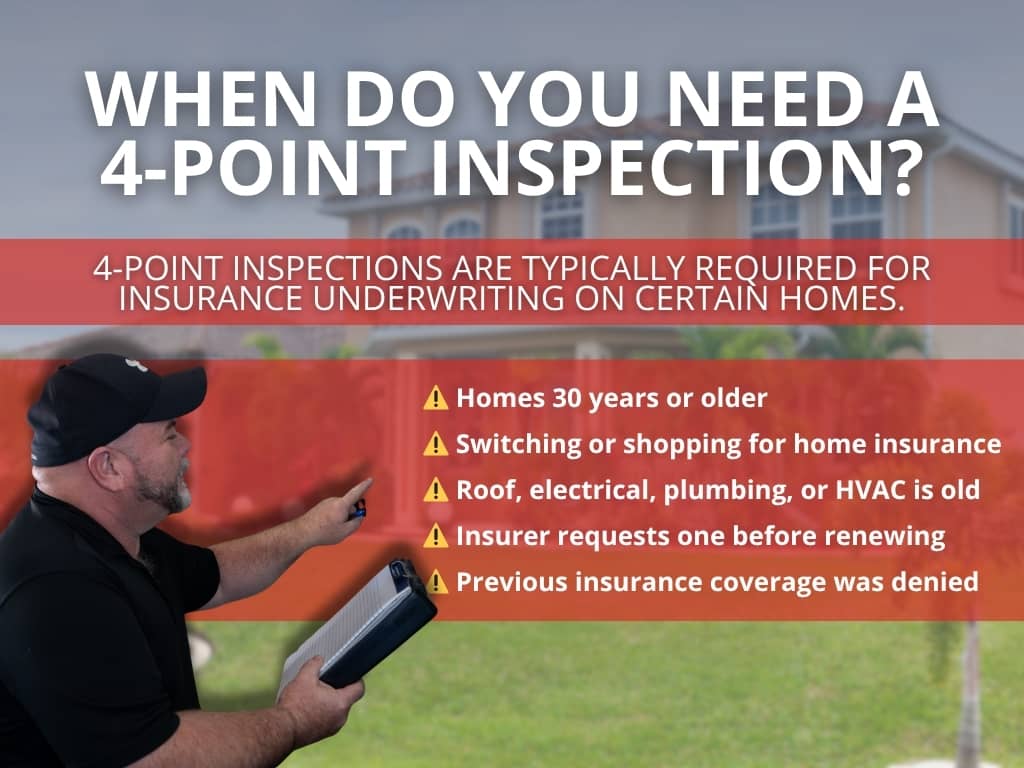
There are a few specific situations where this inspection becomes necessary:
- New homeowners insurance policy: If you’re purchasing a home in Florida that’s more than 20 years old, most carriers (including Citizens Property Insurance) will require a 4-point inspection before they’ll finalize coverage.
- Policy renewal or carrier switch: Your insurer may request an updated report, especially if the home falls within the age threshold. Check with your agent early in the renewal process.
- After a major renovation: If you’ve replaced the roof, upgraded the electrical panel, or installed a new HVAC system, a fresh inspection reflects those improvements and can strengthen your coverage position.
- Buying or selling a home: Buyers in Lee, Collier, Charlotte, and Hendry counties often need one as part of the financing and insurance process. Sellers benefit from getting it done before listing to avoid deal delays.
What Happens If Your Home Doesn’t Pass?
A 4-point inspection isn’t officially a pass-or-fail report. However, if significant issues are noted, your insurance company may decline to write the policy or require specific repairs before offering coverage.
The good news is that most flagged problems are fixable. You can work with a licensed contractor to address the issue, then have the inspector return to verify the repair and update the report. Your insurance agent can guide you on exactly what the carrier needs to see.
4 Point Inspection vs. Full Home Inspection
These two inspections serve different purposes, and one doesn’t replace the other.
- A full home inspection is a comprehensive property evaluation covering the roof, electrical, plumbing, HVAC, foundation, structure, windows, doors, appliances, attic, crawl spaces, drainage, and more. It typically takes two to four hours and produces a 40 to 80-page report.
- A 4-point inspection is specifically designed for insurance purposes, only covers the four systems the carrier cares about, and can usually be completed in under an hour.
If you’re buying a home, you’ll likely need both. The full inspection protects you as a buyer. The 4 point satisfies your insurance company, so you can secure coverage before closing.
How to Prepare
A little preparation helps the inspection go smoothly:
- Clear access to the electrical panel, water heater, HVAC air handler, and attic entry point
- Gather documentation on system ages, recent repairs, permits, and warranty info
- Have any remediation paperwork ready (such as aluminum wiring repairs certified by a licensed electrician)
- Schedule well before your policy renewal or closing deadline so there’s time to address anything that comes up
Related Questions to Explore
Can I use a 4-point inspection from a few years ago? Most carriers now require the inspection to have been completed within the last 12 months. Some will accept a report up to 36 months old, but that’s becoming less common.
Does a 4-point inspection lower my insurance premium? No. It determines whether your home qualifies for coverage, not price. If you’re looking to reduce your premium, a wind mitigation inspection is what unlocks savings by documenting hurricane-resistant features in your home.
Who can perform a 4-point inspection in Florida? It must be completed by a Florida-licensed professional, including licensed home inspectors, general or residential contractors, architects, and engineers with active state licenses.
What form does my insurance company need? Most carriers require a standardized form. Citizens updated theirs in March 2025, so make sure your inspector is using the most current version. Submitting an outdated form can delay your application.
When to Call a Professional
If your insurance agent has requested a 4-point inspection, or if you’re buying, selling, or refinancing a home in Southwest Florida, a licensed inspector is the fastest path to getting it done right.
This is especially important if your home is older, you’ve been through a recent storm, or you’ve made upgrades you want reflected in the report. In Lee, Collier, Charlotte, and Hendry counties, conditions like salt air, high humidity, and storm exposure accelerate wear on all four of these systems.
Working with a local inspector who understands Southwest Florida homes means fewer surprises and a smoother insurance process.
Conclusion
A 4-point inspection is a straightforward process, but it plays a big role in your ability to get and keep homeowners’ insurance in Florida. Knowing what each section covers, when the inspection is required, and how to prepare gives you a real advantage whether you’re buying a home, renewing your policy, or making sure your property stays in good standing.
If you’re in Fort Myers, Naples, Bonita Springs, or anywhere in Southwest Florida and need a 4-point inspection, Accurate Home Inspectors of Florida is here to help. Our team delivers thorough, insurance-ready reports with fast turnaround so you can keep your coverage on track.
Contact us today to schedule your inspection.